Thinking about adding storm protection before you list your West Palm home? You are not alone. Buyers in our area often ask about impact windows and shutters, and the right choice can improve marketability and confidence. In this guide, you will compare both options, understand insurance and permitting, and follow a practical action plan to maximize your return. Let’s dive in.
West Palm storms and buyer expectations
Palm Beach County sits in a high hurricane-risk zone, and buyers in coastal and near‑coastal neighborhoods typically expect robust opening protection. Local code in wind‑borne debris regions recognizes tested impact windows or approved shutters as compliant options. Insurers also look closely at wind mitigation when pricing policies and offering credits.
In short, both impact windows and quality shutters can help your home compete in West Palm Beach, Boca Raton, and Delray Beach. The best choice depends on your property type, price tier, and timeline.
Impact windows: benefits and trade-offs
What you gain
Impact windows are permanently installed systems designed to withstand wind‑borne debris. They stay in place during storms and help reduce wind‑driven rain intrusion. Many products are tested to Miami‑Dade or ASTM standards. Beyond storm season, they can reduce noise, block UV, and improve comfort.
Because they are integrated into the facade, well‑installed impact windows can enhance curb appeal. They are seen as a premium, permanent upgrade and are attractive to year‑round residents and turnkey‑minded buyers.
Considerations before you buy
- Higher upfront cost than most shutter options.
- Permits are typically required, and products must carry Florida or Miami‑Dade approvals where applicable.
- Installation quality matters. Poor installation can void warranties and reduce performance.
- Insurers may offer wind‑mitigation credits, but amounts vary by company and over time.
When impact windows make sense
- Coastal or higher‑end listings where buyers expect permanent protection.
- Single‑family homes where curb appeal and quiet comfort are selling points.
- Sellers with enough time to permit, order, and install before listing.
Shutters: options and trade-offs
Removable panels and fabric systems
These are affordable options that protect openings when installed correctly. They need to be stored and mounted before a storm. Some buyers view them as temporary or inconvenient, so perceived value can be lower in coastal neighborhoods.
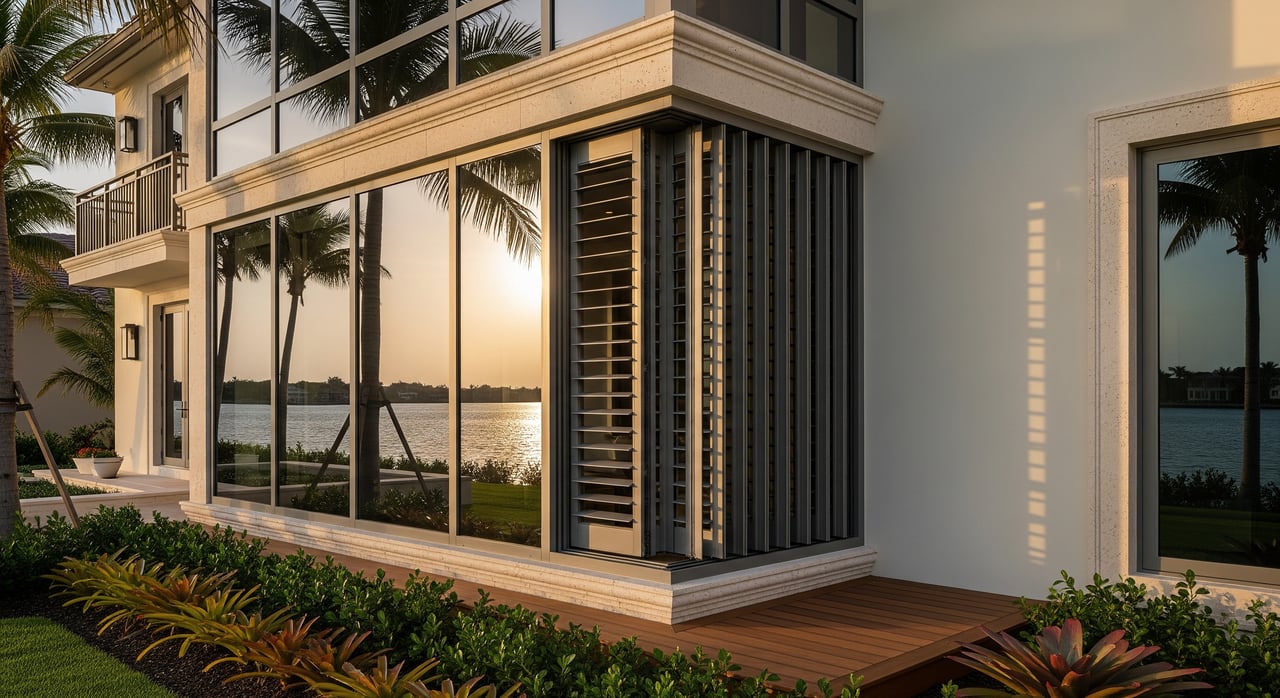
Bahama and Colonial shutters
These mounted styles can provide protection when engineered and rated for impact, and they offer a coastal look many owners like. Value depends on proper ratings and how well they complement the home.
Roll‑down and accordion shutters
These permanent systems provide strong protection when tested and installed by professionals. They are convenient, especially motorized versions, and are often seen as a high‑quality feature in hurricane markets. They can be costly but are a strong selling point when integrated cleanly.
When shutters make sense
- Mid‑market homes where you want solid protection without full window replacement.
- Sellers with shorter timelines who need a permitted, insurable solution quickly.
- Homes where the style of Bahama or Colonial shutters enhances curb appeal.
Insurance and documentation checklist
Wind‑mitigation matters to insurers in Florida. Verified protection can lower risk and support better policy options. To capture value and reduce friction at closing, prepare the following:
- Building permits for window or shutter installation from the city or county.
- Product approvals and test reports, such as Florida Product Approval or Miami‑Dade/ASTM documentation.
- Manufacturer and installer warranties.
- A wind‑mitigation inspection report. Buyers and insurers often rely on this form.
- HOA or architectural approvals for exterior changes, especially for condos and historic districts.
- Receipts and proof of professional installation.
Insurer credits vary by company and change over time. Ask local insurance professionals for written guidance on how each option could affect premiums and underwriting.
ROI: how to decide
Before investing, assess what your market expects and what your timeline allows.
- Compare neighborhood comps within your price range. If nearby West Palm, Boca Raton, or Delray Beach listings commonly feature impact windows or integrated roll‑downs, upgrades may support your price.
- Consider time on market and your deadline. If you need to list fast, a permitted shutter solution can be more practical than full window replacement.
- Factor property type and HOA rules. Many condos require approvals for window changes, and some already have building‑level protections.
- Think about your holding period. If you will own the property longer, impact windows may offer comfort and future resale benefits.
- Ask insurers about credits. If mitigation improves insurability for buyers, it can strengthen your negotiating position.
Strong signals to upgrade now:
- Coastal or higher‑end property where permanent protection is expected.
- Comps show impact windows or roll‑downs are common.
- Insurer feedback indicates meaningful credits or improved policy options.
Signals to consider a lower‑cost approach:
- Inland location and price tier where buyers accept removable or lower‑cost solutions.
- Tight pre‑listing timeline or supply lead times.
- HOA or historic approvals are complex or uncertain.
Condo and HOA rules
Condo associations and some communities control exterior appearances and window specifications. Many buildings already provide common protections. For condo sellers, focus on gathering building‑level mitigation documents, recent inspections, and any association approvals you hold for your unit. If upgrades are allowed, secure approvals before committing to a contractor.
Pre-listing action plan
Follow this step‑by‑step plan to keep your timeline and budget on track.
Step 1: Data and quotes
- Get 2 to 3 written estimates for both impact windows and shutter options, including lead times.
- Ask 1 to 2 local insurance agents for written notes on likely premium credits or underwriting impacts for each option.
Step 2: Permits and approvals
- Confirm permitting with the City of West Palm Beach or Palm Beach County.
- Obtain HOA or architectural approvals where required.
Step 3: Documentation to collect
- Final permits and any certificates of completion.
- Florida or Miami‑Dade product approvals and test certifications.
- Installer invoices and warranties.
- A wind‑mitigation inspection report.
- Any HOA or association approvals in writing.
Step 4: Listing and disclosures
In remarks and marketing, use accurate language such as “impact‑rated windows” or “Miami‑Dade‑approved roll‑down shutters.”
Reference documentation and insurance savings only if substantiated.
Prepare a simple one‑page FAQ for buyers on operation and maintenance, especially for motorized systems.
Step 5: Timeline and contingencies
- Account for seasonal demand that can stretch manufacturing and permitting.
- If upgrades are not feasible before listing, provide buyers with contractor estimates or consider an allowance for post‑closing installation.
Market your protection features
Well‑presented documentation can speed buyer decisions and underwriting. During showings and in your listing materials, highlight:
- The type of protection, the approval standard, and installation dates.
- How systems operate, including any remote or manual controls.
- Insurance‑related documents, such as the wind‑mitigation inspection.
Be concise and factual. Buyers will appreciate clarity and proof over marketing fluff.
Avoid common pitfalls
- Skipping permits or failing to keep receipts can undermine buyer confidence.
- Buying products without Florida or Miami‑Dade approvals can create issues with insurers and appraisers.
- Choosing systems that clash with the home’s look can hurt curb appeal.
- Leaving buyers to guess about maintenance or operation can slow offers. Provide a simple guide.
Your next move
Both impact windows and quality shutters can help your West Palm Beach property stand out. If you sell a coastal or luxury home, permanent, tested protection often supports value and shortens time on market. If you are on a tighter timeline or in an inland price tier, professionally installed, approved shutters can deliver solid protection and buyer confidence at a lower upfront cost.
If you want help weighing ROI for your neighborhood and price point, schedule a conversation with Roger Plevin. You will get local comps, an action plan, and referrals to vetted contractors and insurance pros.
FAQs
What counts as “impact-rated” in Palm Beach County?
- Impact windows and shutters should carry recognized approvals, such as Florida Product Approval or Miami‑Dade/ASTM test documentation, and be installed with permits.
Do impact windows always lower insurance premiums?
- Not always. Insurer credits vary by company and change over time. A wind‑mitigation inspection and written guidance from local agents will show likely savings.
Are roll-down or accordion shutters accepted by insurers?
- Yes, when tested and properly installed. Many insurers recognize permanent, rated shutters for wind‑mitigation credits with the right documentation.
What if my condo association controls windows?
- Check the rules first. Many associations require approvals or provide building‑level protection. Gather building documents and any unit‑level approvals before upgrading.
How should I present storm protection in my listing?
- Use accurate terms like “impact‑rated windows” or “Miami‑Dade‑approved roll‑down shutters,” attach permits and approvals, and include a wind‑mitigation report for buyer and insurer review.