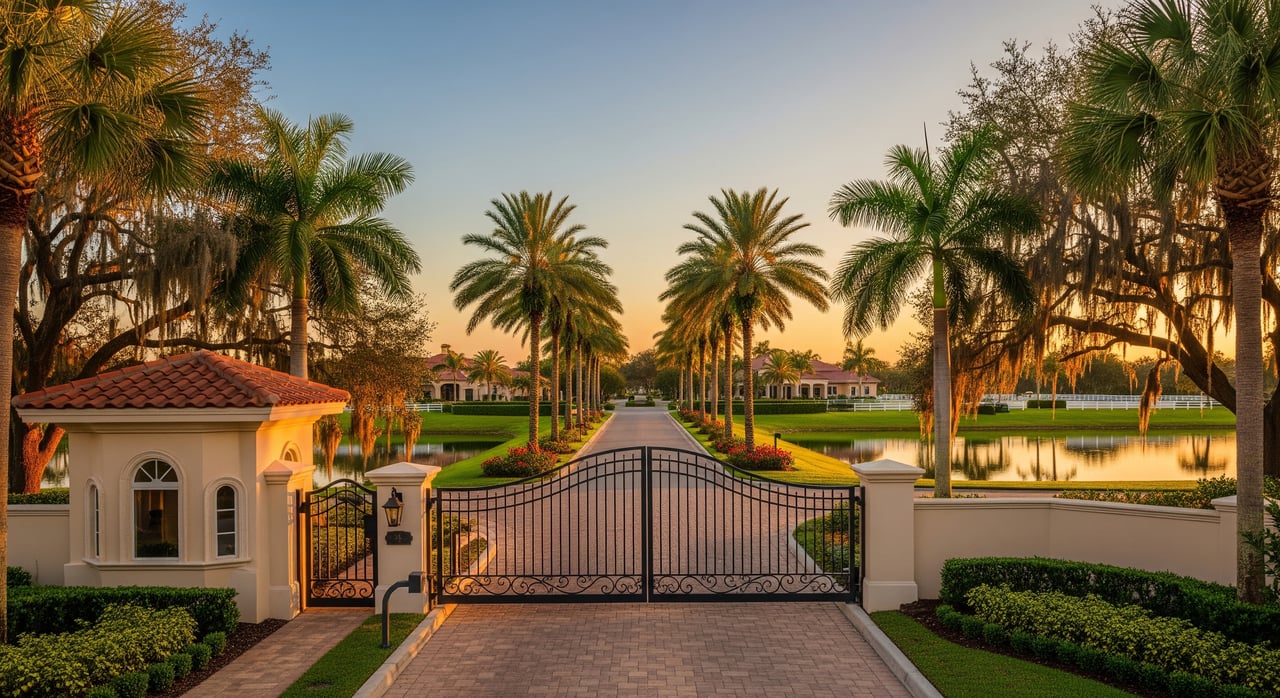
Which Wellington gate fits your everyday life? If you are drawn to 33414 for its suburban ease, equestrian energy, and polished amenities, the next step is choosing the community that matches your routine and budget. The right fit blends commute, club or HOA perks, and the kind of home you want without surprise rules or fees later. This guide shows you how Wellington’s gated communities differ, what to verify before you write an offer, and a simple way to compare options with MLS and public records. Let’s dive in.
Wellington at a glance
Wellington sits inland in western Palm Beach County with a mix of large-lot and equestrian properties, club settings, and amenity-rich gated neighborhoods. Many buyers choose it for suburban living close to showgrounds and parks, with drive-time access to West Palm Beach, Boca Raton, and Delray Beach. Because it is inland, overall flood risk is often lower than oceanfront areas, but risk still varies by parcel. Always confirm a home’s FEMA flood zone and elevation during due diligence.
Choose by lifestyle first
Start with how you plan to live day to day. Then layer in HOA costs, commute, and resale.
If you want equestrian or polo living
- What you get: Larger lots, direct access to riding trails, options for private paddocks or barns, and proximity to Wellington’s showgrounds and polo fields. Some areas include community arenas and clubhouses.
- Who it fits: Buyers who ride or want space for horses and a more rural feel within Wellington.
- Example to compare: Palm Beach Polo & Country Club features multiple housing tiers from condos to estates associated with polo and equestrian culture. Club membership is typically separate from the HOA, so verify what is included and what is not.
- Verify: On-property boarding rules, manure and keeping standards, location and cost of off-site barns if needed, and any maintenance obligations tied to equestrian facilities.
If you want golf or a country-club scene
- What you get: Private golf, dining, tennis or pickleball, fitness centers, and social events. Some sections strongly encourage or require club membership.
- Who it fits: Buyers who value on-site recreation and a built-in social calendar and are comfortable with initiation fees and dues for private clubs.
- Example to compare: Polo Club properties and course-adjacent sections. Confirm which areas have mandatory vs optional memberships and whether amenities are for members only.
- Verify: Membership categories and initiation fees, monthly dues, guest policies, and any capital assessments for course or clubhouse projects.
If you want family amenities without club dues
- What you get: Pools, fitness rooms, playgrounds, sports courts, and staffed or controlled gates funded by HOA dues rather than private club fees.
- Who it fits: Households seeking low-maintenance amenities and community programming without a separate country-club bill.
- Example to compare: Communities often labeled in MLS with names like “Isles,” “Bridges,” or similar. The Bridges at Wellington is frequently referenced by buyers seeking this style.
- Verify: The exact amenity list and hours, guest policies, HOA fee structure and frequency, and rental rules.
If you want an active-adult setup
- What you get: Age-restricted living in some communities, lifestyle programming, and maintenance-included options that simplify ownership.
- Who it fits: Retirees or buyers who want quiet, organized activities, and lock-and-leave convenience.
- Example to compare: VillageWalk of Wellington is often marketed to active-adult buyers. Verify the current age-restriction status and HOA rules before you decide.
- Verify: Age language in the CC&Rs, guest and visitor policies, and rental restrictions.
If you want newer luxury or privacy
- What you get: Newer construction, contemporary floor plans, and gated pocket enclaves with private road maintenance.
- Who it fits: Buyers who prefer move-in-ready finishes, custom-feel homes, or ultra-private estates.
- Verify: Builder warranties, the status and timing of common-area buildout, any developer control over the HOA, and future phases that may affect traffic or amenities.
Everyday practicalities that matter
Security and gate operations
Gated entries range from manned gatehouses to electronic gate arms with call-in or app access. Ask whether staffing is 24 hours or scheduled, how visitors obtain passes, and how frequently used service providers access the community. If you expect frequent guests or vendors, a smooth visitor system will save time and reduce frustration.
Commute and location logistics
Your commute depends on proximity to Southern Blvd, Lake Worth Road, Forest Hill Blvd, and SR 7 or US 441 to reach I-95 or the Turnpike. Travel times vary widely by hour. Plan a test drive from the actual community gate during your typical rush times. Regional transit is limited, so most residents drive. For school commutes, confirm bus routing and pick-up points. For errands and care, most neighborhoods are car dependent, so note the nearest grocery stores, medical offices, urgent care, and hospitals.
Parking, guest arrival, and services
Review parking rules for guests, overnight street parking, and driveway use. If you run a home-based business or anticipate frequent contractor visits, ask about vendor access, temporary passes, and any limits on commercial vehicles.
HOA and membership costs, decoded
One of the biggest misunderstandings in Wellington is the difference between HOA amenities and private club amenities. HOA dues cover HOA-managed amenities like community pools, playgrounds, fitness rooms, and gate operations. Private club memberships are separate and usually require initiation fees and monthly dues. Living near a club or within a “country club” labeled area does not guarantee access. Always confirm if membership is mandatory, optional, or unavailable for non-members.
Before you go under contract, request these documents or plan to review them quickly after you sign:
- CC&Rs, bylaws, rules and regulations, and recent meeting minutes
- Current budget, reserve study, and year-to-date financials
- Insurance certificates and any pending or recent special assessments
- Rental policies and minimum lease terms
- Architectural Review Board (ARB) guidelines and approval timelines
- Pet rules, parking and signage rules, and business-use restrictions
- Transfer and estoppel fees, plus any move-in or move-out scheduling rules
Financing can also hinge on HOA health. Lenders may review reserves, insurance, and delinquency rates. FHA and VA financing can require additional HOA approvals. For condos, underwriting is often more detailed. Ask your lender early to reduce surprises.
Compare Wellington communities like a pro
Use your agent’s MLS access to pull community-level data and spot trends. Search by community name and gated or HOA filters. Narrow by property type, bed and bath count, lot size, and year built. For each community you are considering, ask for these 12-month and current snapshots:
- Median sale price and median list price
- Price per square foot
- Average days on market and list-to-sale price ratio
- Active inventory and months of supply
- Number of sales by property type
- HOA fee ranges on active and recent sales
Cross-check using public sources. The Palm Beach County Property Appraiser confirms parcel details, lot sizes, year built, and taxes. HOA and community websites list amenities and governance. Local news can surface planned improvements or community issues. Expect discrepancies between national real estate portals and the local MLS on price or status. Treat the MLS as your primary record for sold data. Always confirm HOA fees and any assessments directly with the HOA or through an estoppel letter.
Quick side-by-side snapshots
Equestrian and polo communities
- Primary draw: Space for horses, trails, and proximity to showgrounds and polo.
- Home types and lots: From condos to estates, with opportunities for barns and paddocks where allowed.
- HOA vs club: HOA maintains community areas; club membership, if available, is separate and fee-based.
- Commute notes: Many locations are set back from main arteries, so map rush-hour times to Southern Blvd or Forest Hill.
- Top verifications:
- Are on-property barns and boarding permitted on this lot type?
- What are the manure and keeping rules?
- Are any assessments planned for equestrian amenities?
Golf and country-club settings
- Primary draw: Golf, tennis or pickleball, dining, fitness, and social calendars.
- Home types and lots: Villas, townhomes, and single-family homes near or on the course.
- HOA vs club: Confirm whether membership is mandatory, optional for residents, or member-only regardless of residency.
- Commute notes: Gate-to-highway timing varies. Time your drive to I-95 or the Turnpike from the gate.
- Top verifications:
- Initiation fees and monthly dues by membership type
- Guest access and family privileges
- Any capital projects that could lead to assessments
Family-focused gated subdivisions
- Primary draw: Pools, gyms, playgrounds, and neighborhood events without private club dues.
- Home types and lots: Single-family homes and townhomes with manageable yards.
- HOA vs club: Amenities funded through HOA dues; confirm what is included like landscaping or security.
- Commute notes: Many sit along Forest Hill, Lake Worth Road, or SR 7. Drive during school and work peaks.
- Top verifications:
- Full amenity list and hours
- Rental policy and minimum lease term
- ARB rules for exterior changes and fences
Active-adult options
- Primary draw: Organized activities, low-maintenance living, and social programming.
- Home types and lots: Villas, townhomes, and single-family homes with maintenance-included options in some cases.
- HOA vs club: Most amenities are HOA-managed. Some communities may also have private club access nearby.
- Commute notes: Proximity to medical and daily shopping often matters most. Map routes to your providers.
- Top verifications:
- Exact age-restriction language in the CC&Rs
- Visitor and caregiver policies
- Rental and minimum lease rules
Newer luxury enclaves
- Primary draw: Newer builds, modern layouts, and private pocket gates.
- Home types and lots: Larger single-family homes and custom estates.
- HOA vs club: HOA often handles roads and gate; separate clubs, if any, require membership.
- Commute notes: Check if all phases are complete. Construction can affect traffic and noise.
- Top verifications:
- Developer warranty coverage and duration
- Status of amenity buildout and future phases
- Reserve funding and timeline for HOA control transfer to owners
On-site and contract checklist
Pre-visit research
- Pull MLS community stats for the last 12 months, including median price, price per square foot, and days on market.
- Review sample sold listings across a range of prices to understand finishes and lot sizes.
- Request HOA budgets, reserve studies, and rules, or review community websites.
- Check FEMA flood maps and Palm Beach County parcel data for each target property.
On-site due diligence
- Visit the gate and drive your commute during your typical peak hours.
- Identify the nearest grocery stores, medical providers, and services to gauge daily convenience.
- Ask for an estoppel letter, recent meeting minutes, and ARB guidelines.
- Talk to neighbors or community managers about assessments, rule enforcement, and day-to-day experience.
Comparative scoring
- Create a simple matrix that ranks each community on commute, amenities, home and lot style, HOA cost and restrictions, and expected resale liquidity. A clear side-by-side view will make your top choice obvious.
Resale and risk tips
- Distinguish branding from reality. A community name with “Polo” or “Country Club” does not guarantee club inclusion or access.
- Weigh HOA stability. A lower monthly fee without adequate reserves can mean higher risk of future special assessments. A higher fee might include services that reduce your out-of-pocket maintenance.
- Consider niche liquidity. Very specialized communities, like ultra-high-end or equestrian estates, can have smaller buyer pools. Balance personal enjoyment with future resale plans.
- Verify new construction timelines. In newer developments, amenities or roads may be mid-build, and developer-controlled HOAs can change once owners take over.
- Confirm flood zone and elevation for every property you seriously consider, even when inland.
Ready to tour and compare?
If Wellington is on your shortlist, a clear plan and local guidance will make your decision faster and easier. For tailored community shortlists, MLS-driven comparisons, and on-the-ground insights at the gates and clubhouses, connect with Roger Plevin for concierge-level help from search to closing.
FAQs
Do Wellington HOA fees include country-club membership?
- No. HOA fees typically cover HOA-managed amenities. Golf and polo clubs are separate and often require initiation fees and monthly dues.
How much are HOA fees in Wellington gated communities?
- Fees vary widely. Smaller single-family HOAs can be a few hundred per quarter, while amenity-rich or condo associations can be several hundred to over a thousand per month. Always verify with current HOA documents.
Can I keep horses on my property in a gated community?
- It depends on zoning and HOA rules. Equestrian-focused communities may allow it, while most standard gated subdivisions do not. Confirm CC&Rs and local ordinances before you buy.
Are rentals allowed in Wellington gated communities?
- Policies are community-specific. Some HOAs prohibit or cap rentals, while others allow them with minimum lease terms. Get the policy in writing.
Do gates make a community safer?
- Gates add a privacy and access-control layer, but safety varies by neighborhood. Review sheriff or crime maps and speak with the HOA about security staffing and protocols.
How strict are architectural rules for exterior changes?
- Many HOAs use an Architectural Review Board with detailed standards. Expect to submit plans for exterior changes like pools, fences, and landscaping and wait for approval before work begins.